
Solutions / Structured Cabling
Structured cabling and low-voltage infrastructure, installed to last.
The physical layer behind dependable technology: copper and fiber cabling, pathways, racks, and testing, organized and documented so your systems and your IT team can rely on it.
Request a Consultation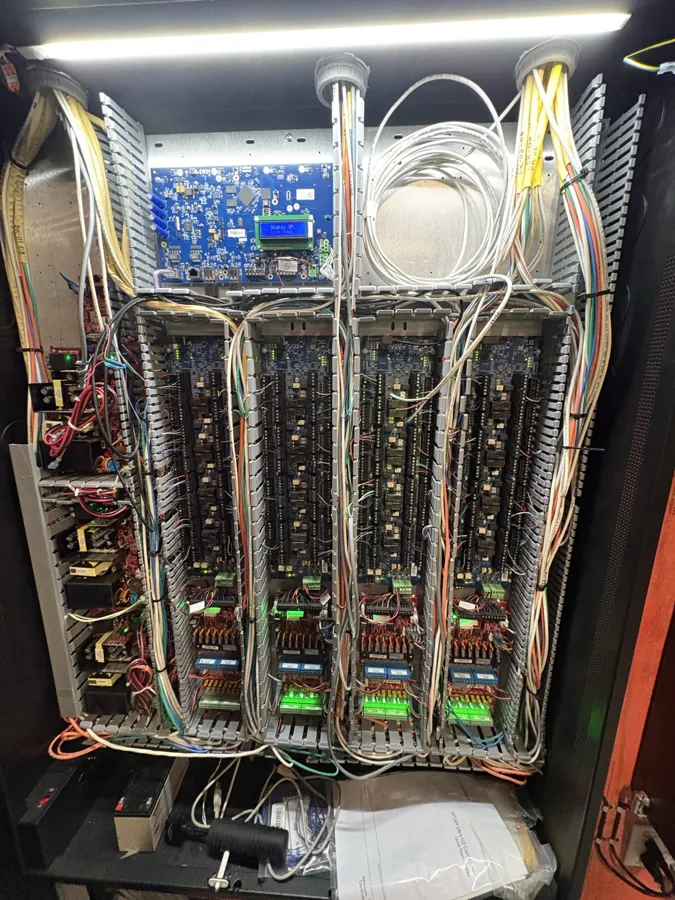
The operational problem
Cabling is invisible until it fails.
Cabling is installed once and expected to serve for years. Poor terminations, unlabeled runs, and overfilled pathways turn routine changes into troubleshooting exercises.
Planning cabling around the systems it will carry, including voice, data, cameras, access control, and AV, avoids rework when those systems are added or upgraded.
Common pressures
Undocumented or unlabeled cable runs
Pathways and rooms with no space for growth
Mixed legacy cabling of unknown performance
Separate trades installing overlapping infrastructure
Capabilities and services
What we install.
Infrastructure is scoped to the building and the systems it supports.
Copper cabling
Horizontal and backbone copper cabling, terminated and tested to the selected category.
Fiber optic cabling
Fiber runs between buildings, floors, and equipment rooms, with terminations and testing.
Pathways and support
Conduit, cable tray, J-hooks, and firestopping coordinated with the building.
Racks and equipment rooms
Racks, patch panels, and cable management arranged for access and expansion.
Testing and labeling
Cable testing and consistent labeling so every run can be identified and supported.
Low-voltage device cabling
Cabling for cameras, readers, intercoms, access points, and displays.
Building system integration
One infrastructure for many systems.
Cabling is planned with the systems that depend on it.
Network infrastructure
Cabling matched to switch locations, PoE requirements, and wireless access points.
Video and access control
Cable paths to cameras, doors, and controllers.
Audio-video systems
Display, conferencing, and sound system cabling coordinated with AV design.
Construction coordination
Scheduling and pathway coordination with general contractors and other trades.
Commercial applications
Where structured cabling is used.
Scope varies by project type.
New construction
Pathways, rooms, and cabling installed in step with the build schedule.
Tenant improvements and renovations
Cabling added or reworked to fit a changing space.
Campus and multi-building sites
Backbone and fiber connections between buildings.
Technology upgrades
Replacing cabling that limits newer cameras, access points, or devices.
The FM Tech approach
Survey, plan, install, verify.
A methodical process leaves behind infrastructure that is easy to support.
Assess
Survey pathways, rooms, and existing cabling, and identify the systems to be served.
Design
Plan cable types, routes, termination points, and rack layouts.
Integrate
Install, terminate, label, and coordinate with other trades.
Support
Test, document, and remain available for additions and service.
Related solutions
Systems that work alongside this one.
FAQ
Useful answers for your next conversation.
What is structured cabling?
Structured cabling is an organized system of copper and fiber cabling, pathways, and termination points that carries data and low-voltage signals throughout a building.
Do you install both copper and fiber?
Yes. We install copper and fiber cabling and select the type based on distance, bandwidth needs, and the devices being served.
Can you test and document the cabling?
Yes. Runs are tested and labeled so your team can identify and support them.
Can you work with our general contractor?
Yes. We coordinate pathways, rooms, and scheduling with general contractors and other trades.
START A CONVERSATION
Let’s build a security strategy around your facility.
Tell us about your building, your current systems, and what needs to work better.